Scalp microneedling — what nobody tells you about hair restoration
If you're considering scalp microneedling for thinning hair, here's the truth about expectations, timelines, and who it actually works for.
Most clients booking scalp microneedling have already tried something else first. Minoxidil for 8 months. Biotin gummies for a year. Three different shampoos. Two different “thickening” serums.
By the time they sit down in front of me, they’re either skeptical, desperate, or both.
Here’s what I tell every single one of them — before they pay for a session.
What scalp microneedling actually does
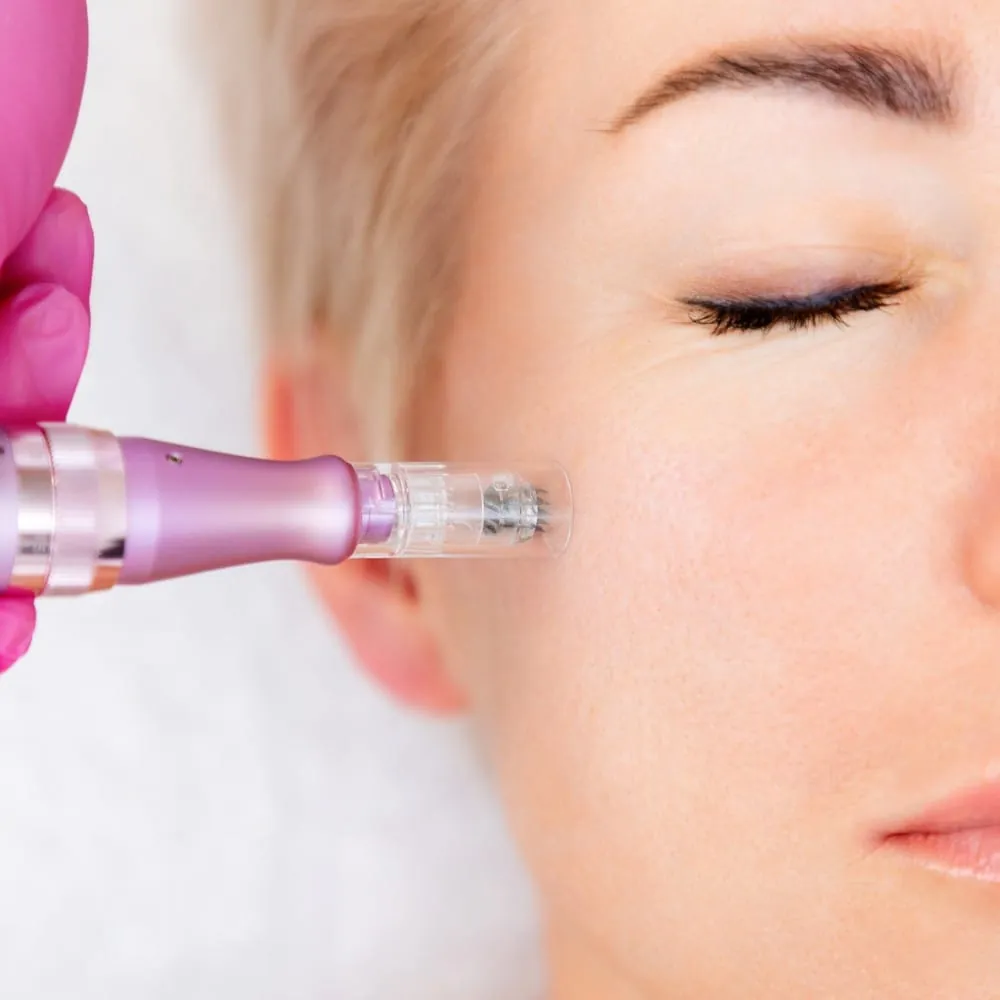
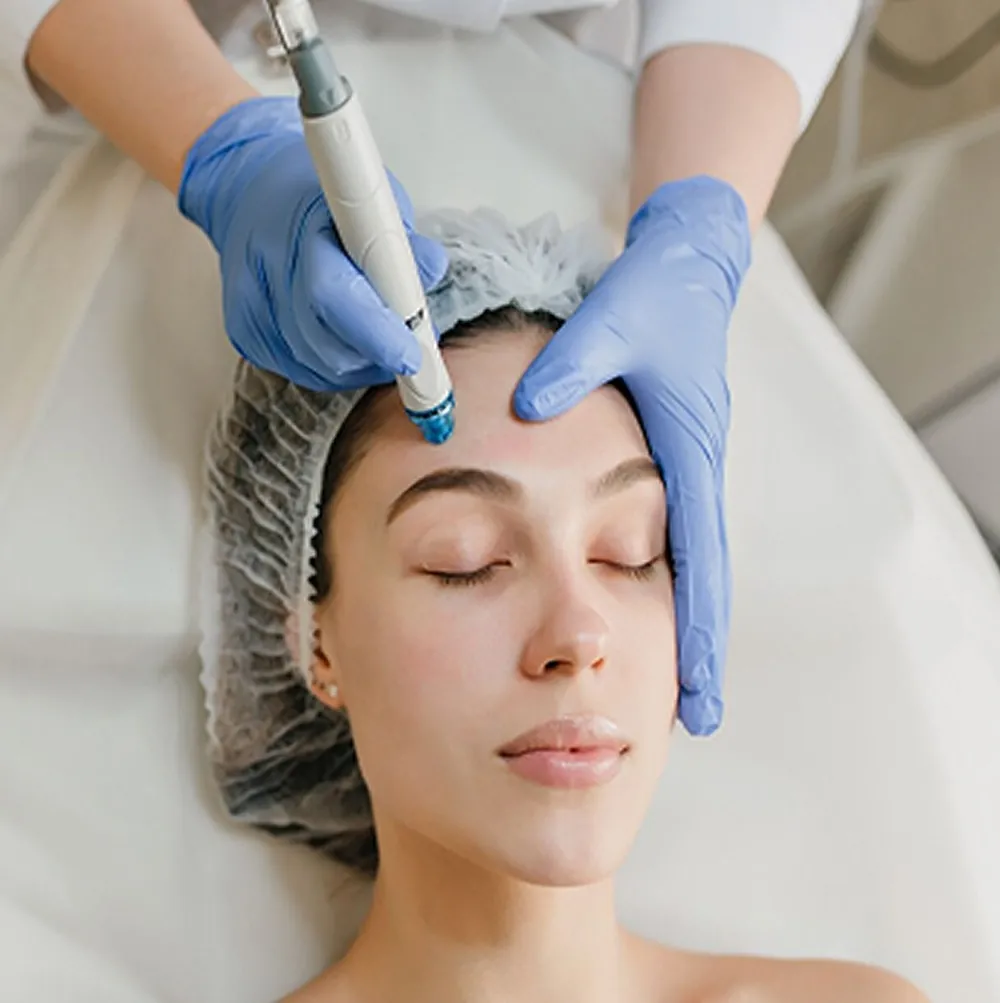
The treatment creates controlled micro-channels in your scalp at follicle depth. Two things happen:
- Blood flow increases to the follicle zone for several days after the session.
- Growth factors are released locally as part of your body’s natural healing response.
The combined effect: dormant or weakened follicles get a “wake up” signal. Existing hair thickens. New hair can emerge from follicles that had slowed down.
This is the entire mechanism. No drugs. No hormones. No pharmaceutical side effects. Just physical stimulation, repeated 4–6 times over 4–6 months.
What it won’t do
Honest list. Read carefully.
- It won’t grow hair on a fully smooth scalp. If the follicles are completely gone, no amount of needling brings them back. This is biology, not marketing.
- It won’t replicate a hair transplant. Transplants move existing follicles to new locations. Microneedling reactivates what’s already there. Different treatments, different outcomes.
- It won’t work overnight. Most clients see visible density improvement around session 4 (so about 4–5 months in). Earlier sessions look like nothing’s happening — because nothing visible is happening yet.
- It won’t fix shedding caused by an underlying medical condition. If your hair loss is from thyroid, iron deficiency, autoimmune, postpartum hormone shift, or stress — those need to be addressed in parallel. The needling helps, but the medical cause needs its own answer.
Who it works best for
In my own client outcomes, scalp microneedling produces the strongest results for:
- Early thinning — people who’ve just started noticing a wider part, lighter density at the crown, or “scalp shows through more than it used to”
- Androgenic alopecia caught early — male or female pattern thinning before it’s progressed to bald spots
- Postpartum hair loss in the recovery window (4–12 months after birth) when follicles are restarting
- Stress-related diffuse thinning that’s resolved at the source but hair density hasn’t bounced back
- People who tried Minoxidil and either didn’t tolerate it, or want to stop without losing progress
If you’re earlier in the journey, the results are stronger. If you’ve waited 10 years and the scalp is largely bare, the needling may still help marginally, but expectations should be calibrated.
What 6 sessions actually looks like
I’ll walk you through a realistic timeline.
Session 1 (week 0): baseline photos taken. Mild scalp tenderness for 24 hours. No visible change.
Session 2 (week 5): session repeated. Some clients report less hair on their pillow / in the shower drain. No visible density change yet.
Session 3 (week 10): photos taken — usually still no visible difference compared to baseline. This is the expectation valley — most clients get discouraged here. Hold the line.
Session 4 (week 16): photos taken. About 70% of clients show visible improvement on photo compare at this point. Slightly thicker hairs, some new “baby” hairs starting in thinning areas.
Session 5 (week 22): density measurably improved. Part appears narrower under bright light.
Session 6 (week 28): typically the peak of the original course. Photos clearly different from baseline.
After 6 sessions, most clients shift to maintenance — one session every 2–3 months — to hold the gains. Some plateau and don’t need more.
What about Procell scalp for hair restoration?
We also offer the Procell scalp protocol (CA$299/session vs CA$250 for standard scalp microneedling). Difference: Procell adds stem-cell-derived growth factor serums delivered directly into the channels.
When I recommend Procell scalp over standard:
- Thinning that’s progressed beyond “early”
- Standard scalp microneedling has plateaued after 6 sessions
- Client wants the strongest non-pharmaceutical option available
- Bigger area to treat (full crown + temples vs. one localised area)
For early or moderate thinning, standard scalp microneedling is usually enough. Don’t overpay if you don’t need to.
The honest cost calculation
Standard scalp microneedling: CA$250/session, 3-session package CA$650 (save CA$100).
A starter course = 6 sessions = CA$1,300 (or CA$1,300 if you buy as 2× 3-packs).
Compared to:
- Lifetime Minoxidil (~CA$30/month forever) = CA$360 a year, growing.
- Hair transplant: CA$5,000–CA$15,000.
- “Hair growth gummies” with no scientific backing: depends how long you stay convinced.
For early-to-moderate thinning, scalp microneedling is the middle-ground intervention. Higher upfront than Minoxidil, much lower than transplant, drug-free.
What I tell clients on session 1
Three things, every time:
- Take baseline photos in your bathroom at 8 PM under your normal lighting. Same angle, same lighting, every 4 weeks. Don’t rely on memory or mirror checks — both lie.
- Don’t quit at session 3. I know it feels like nothing’s happening. Visible improvement starts at session 4 in most cases. Stick to the plan.
- Address the underlying cause if there is one. Blood test for ferritin and vitamin D. Thyroid panel if you’ve never had one. Better outcomes when the cause is being addressed alongside the treatment.
Booking honestly
If you’re not sure whether scalp microneedling is the right call for your hair pattern, book the free 15-min consult. Bring photos of the thinning area from the past 2 years if you have them — they help me understand trajectory.
If I look at your scalp and think a Procell protocol or a referral to a dermatologist will serve you better, I’ll say so. Sometimes both at once. That’s why the consult exists.
— Maimoona Silkentouch Aesthetics · Cambridge, ON